Do Dressage Horses Have Tail Extensions?
Yes. Tail extensions are used regularly in dressage — at every level from amateur shows to international Grand Prix. What varies is how visible they are, and how well they are matched.
Why dressage riders use tail extensions
A tail that ends above the hock breaks the silhouette. In dressage, where judges are reading the whole picture from poll to toe, a short or sparse tail shortens the line and makes movement look less expansive than it is.
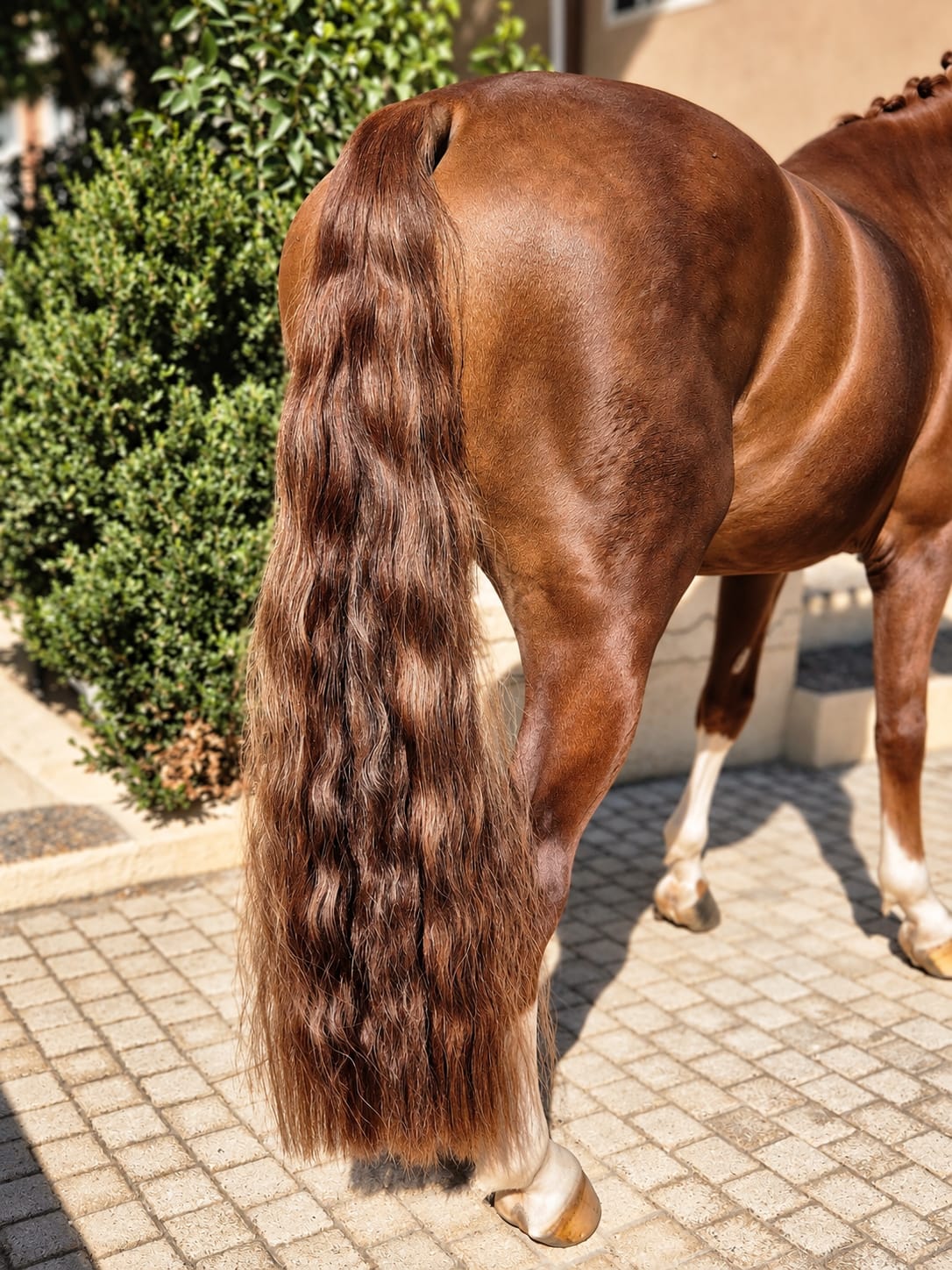
A well-fitted tail extension adds length and volume without changing the tail's natural carriage. It swings with the stride, hangs in passage the same way, and in a closely matched shade reads as the horse's own tail from the letters.
Are tail extensions allowed in dressage competitions?
Rules vary between federations and are updated periodically. Extensions that contain no metal parts and attach hair-to-hair are permitted in many disciplines. Always check your federation's current rulebook before competing. Equine Tails extensions contain no metal parts and attach to a braid of your horse's own hair.
What to look for in a dressage tail extension
Colour match. This is the part that matters most. An extension a shade too light or too dark is visible from the centre line. Send a photo of your horse's tail in daylight before you order and we will help you find the closest shade.
Weight. Standard Fairytail Extensions weigh 450g — enough to add length and volume while moving naturally. For extra fullness, see Max Volume.
Attachment. The Braided Loop is the quickest and easiest to fit, and sits flat under the tail so the join is invisible. The Leather Top offers a structured alternative.
Length. Measure from the attachment point to where you want the tail to fall. Most riders finish just above the fetlock in the arena.
Not sure which suits your horse? Send us a photo and we will help you choose before you order.