Five Horses with the Most Iconic Tails in Equestrian History
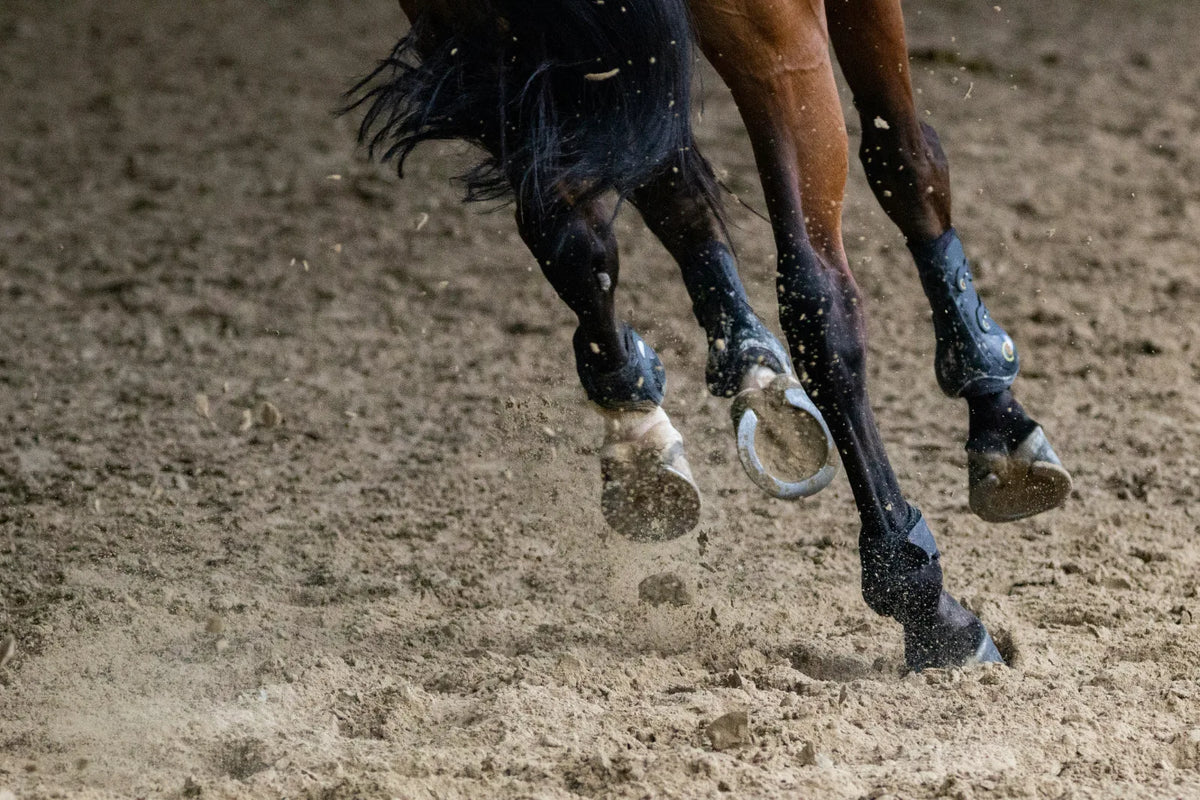
There is something undeniably powerful about a horse in full movement — neck arched, stride extended, and tail carried high like a flag. In the world of equestrian sport, a horse's tail is more than aesthetics. It is an expression of energy, breed, and character. Some horses have become so iconic that their silhouette alone — tail included — is instantly recognisable to anyone who has ever watched a dressage test or followed a Grand Prix.
Here are five horses whose tails became as legendary as their careers.
No. 01 Totilas — The Black Comet
If there is one horse that redefined what dressage could look like, it is Totilas. The jet-black KWPN stallion, bred in the Netherlands and ridden by Edward Gal, became the first horse in history to break the 90% barrier in Grand Prix competition. At the 2009 European Championships at Windsor, his tail — long, thick and carried with an almost theatrical lift — swept through the arena like a metronome marking the rhythm of something extraordinary.
Watching Totilas perform his piaffe and passage was like watching choreography rather than sport. His black tail, always full and impeccably groomed, moved in perfect harmony with his hindquarters — a visual extension of the power coming from behind. In 2010, he swept three gold medals at the FEI World Equestrian Games in Kentucky, and every image from that championship tells the same story: a horse who looked as extraordinary as he performed.
"The partnership and the silhouette of Edward and Toto became iconic — something those of us lucky enough to see them live will never forget."
Totilas passed away in December 2020 at the age of 20. His silhouette — and that iconic tail — lives on in the imagination of every dressage rider who watched him move.
No. 02 Valegro — The Horse Dancer
Known to his connections simply as Blueberry, Valegro was a dark bay Dutch Warmblood gelding who, alongside Charlotte Dujardin, became the most decorated dressage horse in British history. He won individual gold at both the 2012 London Olympics and the 2016 Rio Olympics, and at Olympia 2014 he achieved what remains the highest Grand Prix Freestyle score ever recorded: 93.4%.
In dressage, the tail tells you everything about collection and engagement. Valegro's tail — carried forward and with life, never clamped or stiff — was the signature of a horse moving through his body freely and with genuine expression. It was part of what made his extended trots so breathtaking: the tail followed the energy like a pennant in the wind.
Blueberry retired from competition in 2016 with a farewell performance at the London International Horse Show, broadcast live on the BBC to millions who had never watched dressage before. He passed away peacefully in December 2025, aged 23 — his legacy written not just in medals, but in every rider he inspired.
No. 03 Rembrandt — The Quiet Genius
Long before Totilas and Valegro rewrote the record books, there was Rembrandt. The dark bay Westphalian gelding, ridden by German rider Nicole Uphoff, won four Olympic gold medals across the 1988 Seoul and 1992 Barcelona Games — a feat that has never been equalled in Olympic dressage history.
Rembrandt was a horse of a different era, when dressage was judged on purity of movement and classical correctness. His tail was always well set and naturally carried — a reflection of his breed's elegant conformation and the classical training that underpinned his entire career. He moved with a quiet confidence that made him almost impossible to ignore in the arena.
He is a reminder that iconic does not always mean dramatic. Sometimes it means perfect.
No. 04 Secretariat — Power Made Visible
Secretariat is not a dressage horse. He is something else entirely: a Thoroughbred who, in 1973, won the Belmont Stakes by 31 lengths and set a world record that still stands today. He is widely considered the greatest racehorse who ever lived.
In flat racing, a tail tells a different story. It flies out behind the horse — a streak of chestnut hair cutting through the air as the horse accelerates beyond what seems physically possible. Secretariat's chestnut tail, streaming out as he rounded the final turn at Belmont, became one of the most reproduced images in the history of American sport.
His tail was not plaited or presented. It was simply free — and in its freedom it captured something that can never be manufactured: pure, unbridled speed.
No. 05 The Lusitano Stallions — A Living Tradition
No list of iconic equestrian tails would be complete without the Lusitano and Andalusian stallions of the Iberian peninsula. These Baroque breeds, with their naturally high tail carriage and abundant, flowing hair, represent thousands of years of classical equestrian tradition.
The Portuguese School of Equestrian Art in Lisbon and the Real Escuela Andaluza del Arte Ecuestre in Jerez preserve the art of classical dressage in its purest form. When a Lusitano stallion performs a levade or a capriole, the tail fans out behind him like a brushstroke — an arc of movement that connects the horse to something ancient and enduring.
These horses are not competing for scores. They are performing a living tradition, and the tail — long, thick, and carried with effortless nobility — is as much a part of their identity as the breed itself.
- Dressage: A freely swinging tail indicates suppleness and a horse working correctly through its back
- Racing: The tail streams freely behind, a visual signal of forward momentum and energy
- Classical equitation: High natural carriage is a breed characteristic prized above all else in Baroque horses
- Show jumping: Tail movement is less scrutinised, but tension still shows — a clamped tail signals a horse that is not relaxed
The Tail as a Window into the Horse
In the equestrian world, a horse's tail is never just decoration. It reflects how a horse is trained, how freely it moves through its back, and how much expression it carries into the arena. A tail that swings freely with the rhythm of the gaits is the mark of a horse working correctly and without tension.
It is also, of course, one of the most beautiful things about a horse in motion. And the most iconic tails in history were not the most elaborate ones. They simply belonged to horses who moved like nothing else on earth.
Dreaming of a fuller, longer tail for your own horse? Explore our Fairytail Extensions, from Natural Black to Chestnut.